
Some believe that the proliferation of artificial intelligence and robotics compromises our personal lives, our work and even our security. More and more tasks are devoted to the implementation of silicon-based brains. But even the loudest critics can not but acknowledge the obvious benefits that AI and automated systems are preparing for humanity. As part of the Grand Challenges project, the BBC gathered experts who outlined their vision for the future in the presence of machines and artificial intelligence.
"We should consider AI not as something that competes with us, but as something that can strengthen our own capabilities," says Takeo Canada, a professor of robotics at the Carnegie Mellon University. Because AI has a tolerance for boredom, and also knows how to identify patterns much better and faster than people. Automation has already begun to unravel the most complex parts of our world, from disease to cruelty.
And it can make our life safer in the 21st century.
The battle with infectious diseases
For billions of people around the world, buzzing mosquitoes near the ear can mean much more than an annoying bite - it can be a harbinger of disease and even death. One species - Aedes aegypti - especially spread from Africa in almost all tropical and subtropical regions, suffering the fever of Dengue, yellow fever, Zika and chikungunya (a virus that causes crippling joint pains). Dengue alone infects 390 million people in 128 countries every year.
"This mosquito is a tiny demon," says Rainier Malloll, a computer engineer from the Dominican Republic, Zick's hot spot. Together with Desi Raja, a medic from Malaysia (another country at risk of contracting the virus), the couple developed AI algorithms that predict where flares are most likely to occur.
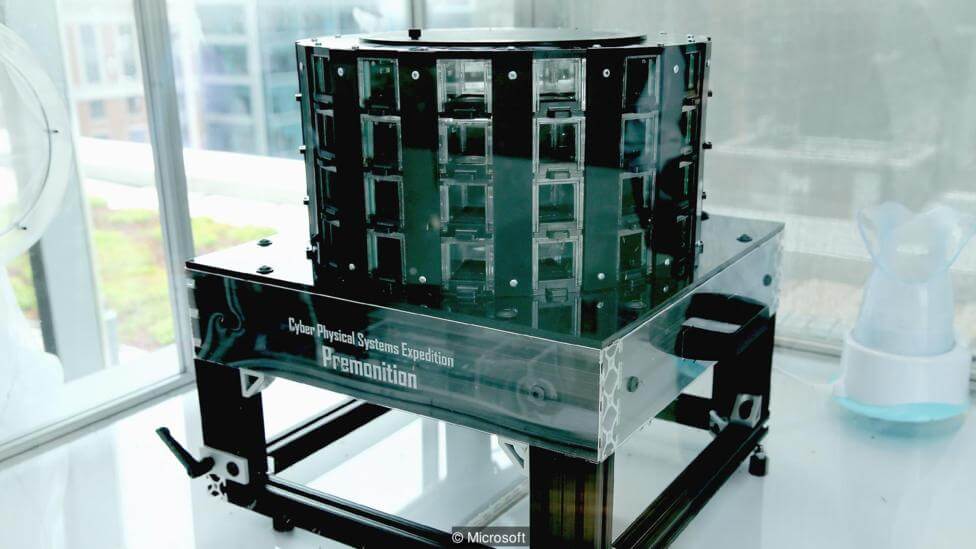
Project Premonition from Microsoft uses unmanned aerial vehicles to search for pathogens in Zika's hot spots
Their artificial intelligence in the field of medical epidemiology (Aime) is a system that combines the time and location of each new Dengue case with reports from local hospitals with 274 other variables such as wind direction, humidity, temperature, population density, type of housing. "These are all factors that determine the spread of mosquitoes," explains Malloll.
Trials in Malaysia and Brazil showed that they can predict outbreaks with an accuracy of about 88% in three months. The system also helps to identify the epicenter of the outbreak with an accuracy of up to 400 meters, allowing local medics to intervene in time with insecticides and protection against bites for local residents.
Aime is also evolving to predict the outbreaks of Zik and Chikungunya. Huge technology companies in their own way develop this idea: for example, the Project Premonition from Microsoft uses autonomous drones to detect hotbeds of mosquitoes, and use carbon dioxide and light traps to catch these insects. The DNA of the mosquitoes and the animals they bitten, then analyzed by machine algorithms, which reveal regularities in giant volumes of data all the better and better each time - and find pathogens.
Fighting weapons
Over the past year in the US, 15,000 people died because of the shooting. This country has the highest level of weapons-related cruelty in the entire developed world. To solve the problems with random shooting and weapons-related crimes, in some cities the country turns to technology for help.
An automated system that hears the sounds of shots through a series of sensors can be used to determine the location where the shots were fired and to alert the security forces within 45 seconds after the trigger was released. ShotSpotter uses 15-20 acoustic sensors per square kilometer to detect a characteristic "cotton" shot, determining its birthplace to an accuracy of 25 meters.
Machine learning techniques are used to confirm that the sound was a gunshot and count the number of shots, indicating whether the police will deal with a single gunner or several criminals, and whether they use automatic weapons or not.
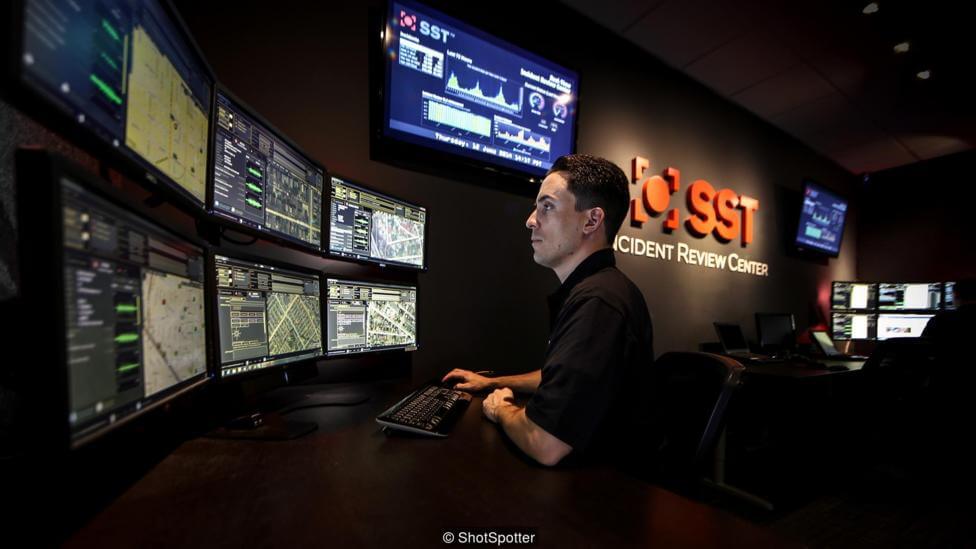
Already 90 cities - mostly in the US, but also in South Africa and South America - use ShotSpotter. Small systems were also deployed in nine campuses in the US in response to recent shooting on campus.
Ralph Clark, executive director of ShotSpotter, believes that in the future this system can be used not only for simple incident response.
"We want to understand how our data can be used for the predictive capabilities of the police," he says. "Machine learning can be combined with weather, traffic and others to more accurately inform police patrols."
Fighting hunger
About 800 million people around the world rely on the roots of cassava (cassava) as the main source of carbohydrates. This starchy vegetable, like yam, is eaten like potatoes; it can also be milled into flour for cooking bread and baking. It can grow where other cultures can not, which makes cassava the sixth largest food plant in the world. However, this woody shrub is also vulnerable to diseases and pests, which can lead to the devastation of whole fields of vegetables.
Researchers from Makerere University in Kampala, Uganda, have teamed up with plant disease experts to develop an automated system designed to combat cassava diseases. The Mcrops project allows local farmers to photograph their plants on cheap smartphones and use computer vision to identify signs of the four major diseases that lead to the devastation of cassava crops.
"Some of these diseases are extremely difficult to recognize, and they require different actions," explains Ernest Mvebaze, a computer science researcher who leads the project. "We give the farmers a pocket expert so they know whether to pollinate the crop or to destroy and plant something else."
This system diagnoses cassava disease with 88 percent accuracy. Usually, farmers need to call government experts to visit farms to identify diseases, which takes days and weeks until the disease spreads.
Mcrops also allows you to upload snapshots to a database, on the basis of which epidemics are then diagnosed. Mwebaze hopes that this technology will also automatically identify the problems of other plant species, such as bananas.
The fight against cancer and loss of sight
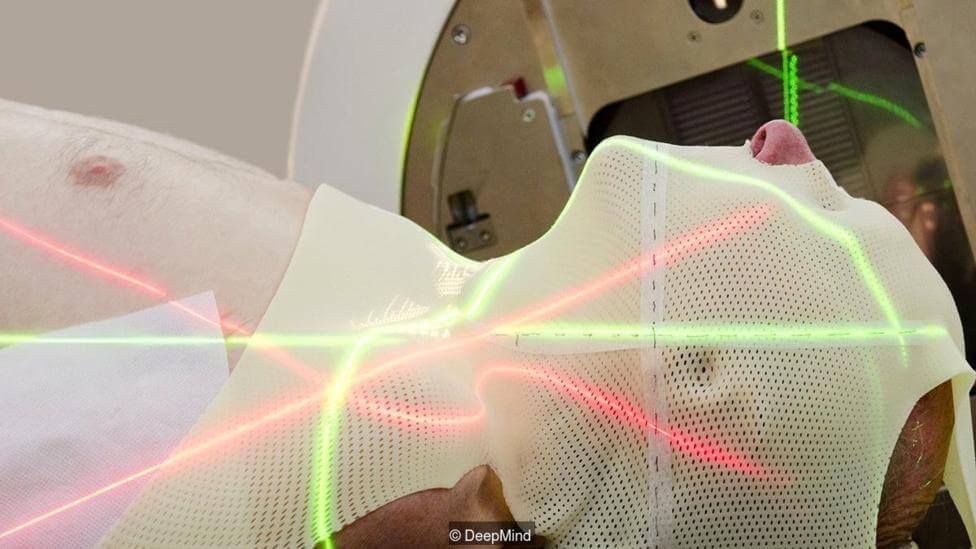
DeepMind from Google can help doctors with cancer treatment, thanks to machine learning, which will help him identify healthy areas of the patient's tissues
Cancer leads to more than 8.8 million deaths worldwide, and 14 million people are diagnosed with some form of cancer every year. Early detection of cancer can significantly increase the chances of survival and reduce the risk of recurrence. Screening is one of the key ways to detect cancer early, but it's very, very difficult and long to understand scans and other test results.
DeepMind and IBM apply their AI technologies to this problem. DeepMind teamed up with British National Health Service physicians at university colleges in London to train its program based on AI to treat cancer, separating healthy tissue areas from tumors while scanning the head and neck. She also works with the Moorfields Eye Hospital in London, revealing early signs of vision loss when scanning the eyes.
"Our algorithms are able to interpret visual information when scanning," said Dominic King, chief clinician at DeepMind Health. "The system learns to identify potential problems and recommend the right course of action to the doctor. It's too early to comment on the results, but they are already very encouraging. "
King says that AI methods can help doctors diagnose a diagnosis faster by sifting scans and prioritizing those that are recommended for immediate consideration.
IBM also recently announced that AI Watson can analyze images and evaluate patient records, accurately identifying the tumor in 96% of cases. Now the system is undergoing medical tests in 55 hospitals around the world, helping to diagnose breast, lung, colorectal cancer, cervical, ovarian, stomach and prostate cancer.
Do not turn off the light
Against the backdrop of heated debate about whether climate change could cause two catastrophic hurricanes on a historical scale in the US, how could it be possible to best leverage artificial intelligence to study the use of clean, renewable energy to prevent further damage that leads to climate problems?
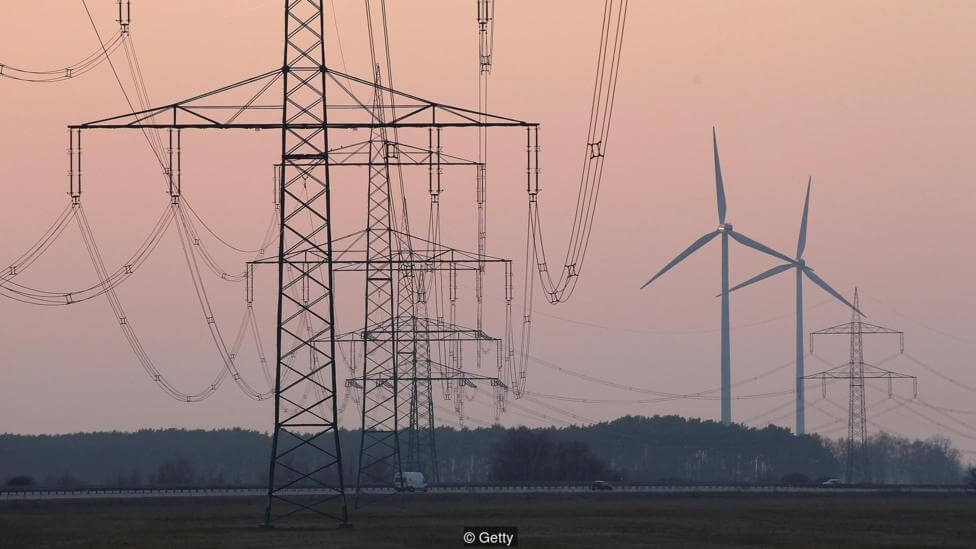
People around the world are increasingly relying on renewable energy sources to combat climate change and pollution caused by fossil fuels, and the task of balancing energy networks with such intermittent sources is becoming increasingly difficult. The proliferation of smart meters - digital energy monitors that automatically record consumption - will also provide a lot of information about how and when consumers use energy. Only in the European Union is planned to install 500 million smart meters in homes by 2020.
"Managing all these assets is impossible for a person, since the response time is often on the order of a few seconds," says Valentine Robu, assistant professor of intellectual systems at Heriot Watt University in Edinburgh. He works with the British company Upside Energy, developing new ways of managing electrical networks.
They create algorithms for machine learning to monitor production and demand for energy in real time. What does it mean? That energy will be stored in quiet hours and then released during peak hours, for example, in the morning, when everyone wants to make coffee. As electric vehicles and household batteries become more common, technologies can be used to store energy and distribute renewable flows evenly.
Rob also says that AI can be used at an even more basic level, helping to reduce our demand for connected devices. For example, the AI can control the refrigerators directly, so that they are switched on only when the demand for electricity is the lowest in the network.
The article is based on materials .
Comments
Post a Comment