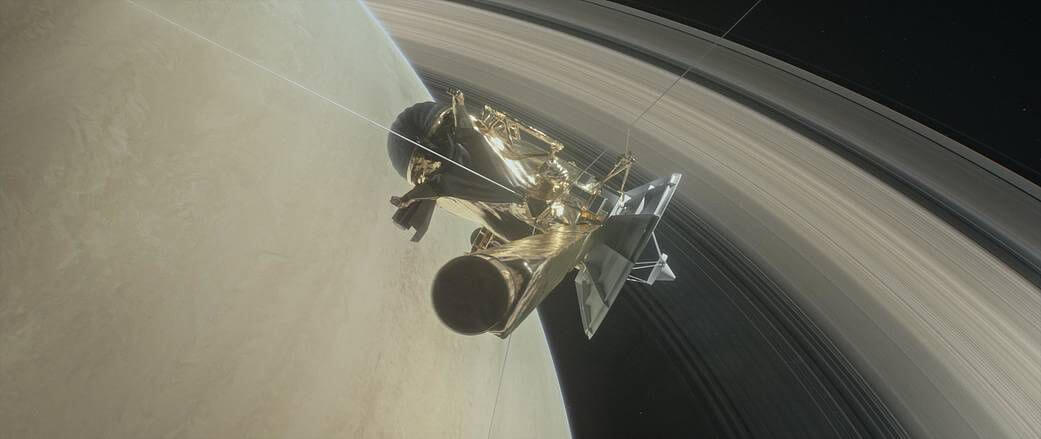
For the past 13 years, the Cassini spacecraft has silently changed our understanding of the solar system. Cassini's mission - a joint project of the US aerospace agency NASA and the European Space Agency worth $ 3.62 billion - was to study the gas giant Saturn and its numerous moons. But tomorrow this mission will approach its literally burning end. On Friday, at 7:55 am Eastern time, the Earth will stop receiving data from the Cassini, since the device will fall into the atmosphere of Saturn at the speed of the meteor and will be deliberately destroyed. By this time, astronomers have been preparing for many years.
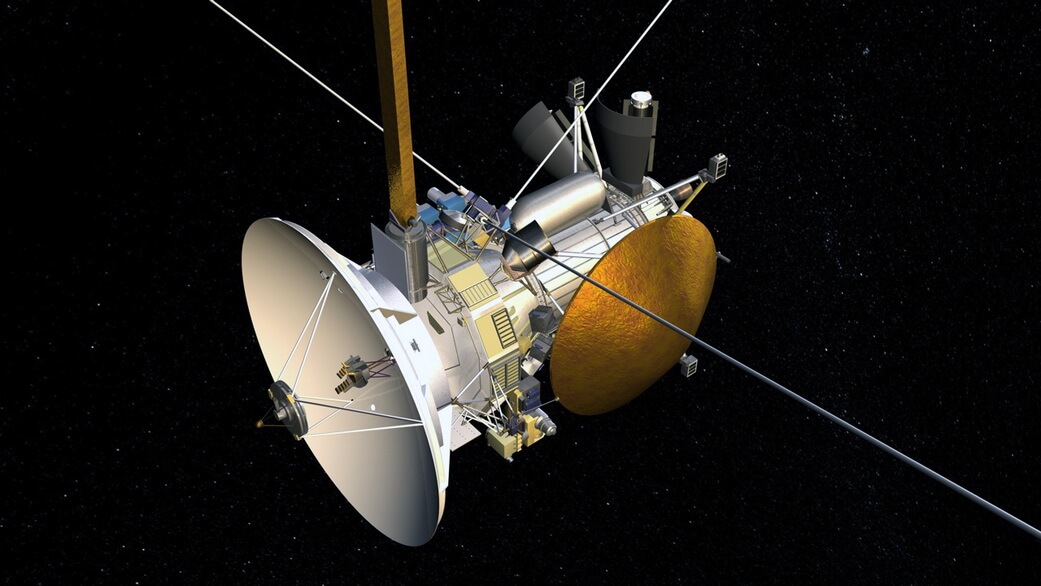
All the instruments of the spacecraft are still working perfectly, but a long mission spent almost all the fuel needed to correct the orbital trajectory of the probe around Saturn. But instead of just letting the machine get out of control and possibly crash elsewhere, the mission management team programmed the probe's computer to enter the atmosphere of Saturn in order to save the companions of the planet and any possible forms of life that are on them.
Despite all the merits of this spacecraft, "Cassini", so to speak, was always an outsider. His mission was not as bright as the mission of New Horizons, flying past Pluto, or any other mission connected with Mars, where in the past couple of decades the US agency has sent more than one landing module and rover. Topics related to the mission near Saturn, rarely made up the main news headlines. However, the absence of the HYIP did not in any way reduce the degree of scientific importance of the discoveries that Cassini made.
The History of Cassini
If you drop the formalities, it began on October 15, 1997, when the Titan IVB / Centaur carrier rocket "Cassini" was put into Earth's orbit. The launch was joint - the launch vehicle also brought into orbit the probe "Huygens", built by the European Space Agency. This device was designed for landing on the largest satellite of Saturn Titan, from where he could transmit scientific data to researchers on Earth.
The launch was not without excesses. There were people who protested against the launch of Cassini because of the fear of contamination of the environment by plutonium fuel, on the basis of which the spacecraft operates. Before sending the "Cassini" physicist Michio Kaku said that if the launch is unsuccessful and the rocket explodes, the radioactive material will be showered by the people near the launch pad. The NASA agency and government agencies rushed to assure everyone that such a situation is simply impossible. Fortunately, in the end, the launch really went off without any problems.
Two spacecraft arrived to Saturn 7 years after they were launched from the launch complex at Cape Canaveral. "Huygens" landed on Titan on January 14, 2005. Since then, "Cassini" has done a lot of orbital revolutions around the planet and its satellites. Thanks to him, we had the opportunity to take a fresh look at this system, to understand the features of the rings of the planet.
Satellites
Starting from the huge Titan and ending with the tiny moon Daphnis - observations of "Cassini" allowed to learn a lot about the companions of this giant ring planet. Saturn and its satellites can literally be regarded as a solar system in miniature.
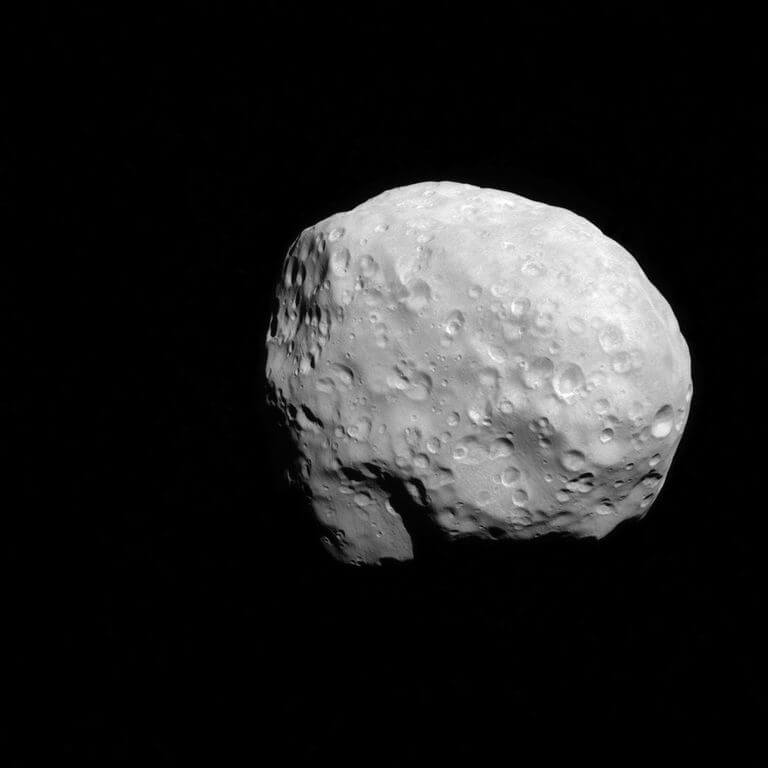
Epimetheus
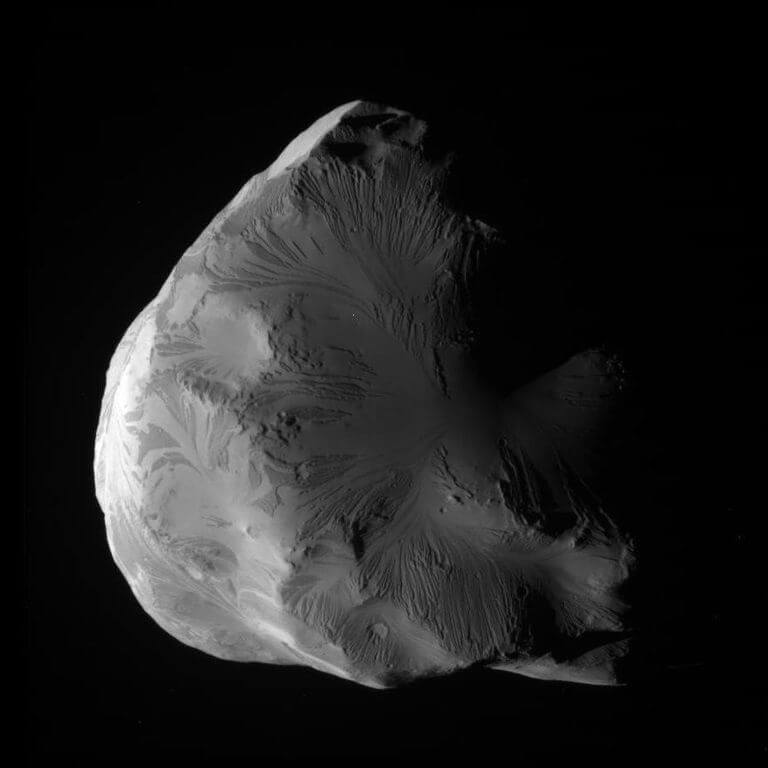
Elena
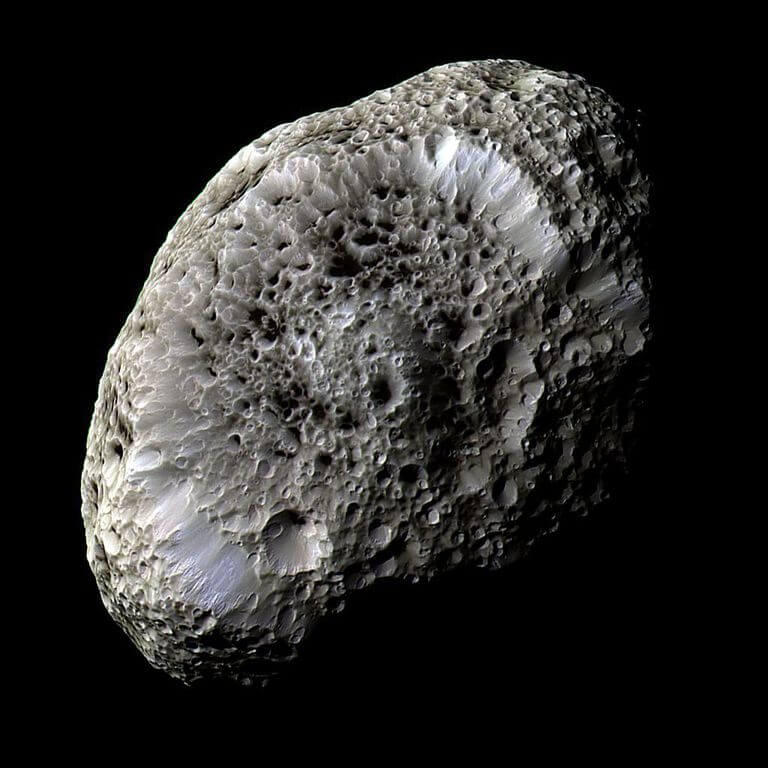
Hyperion
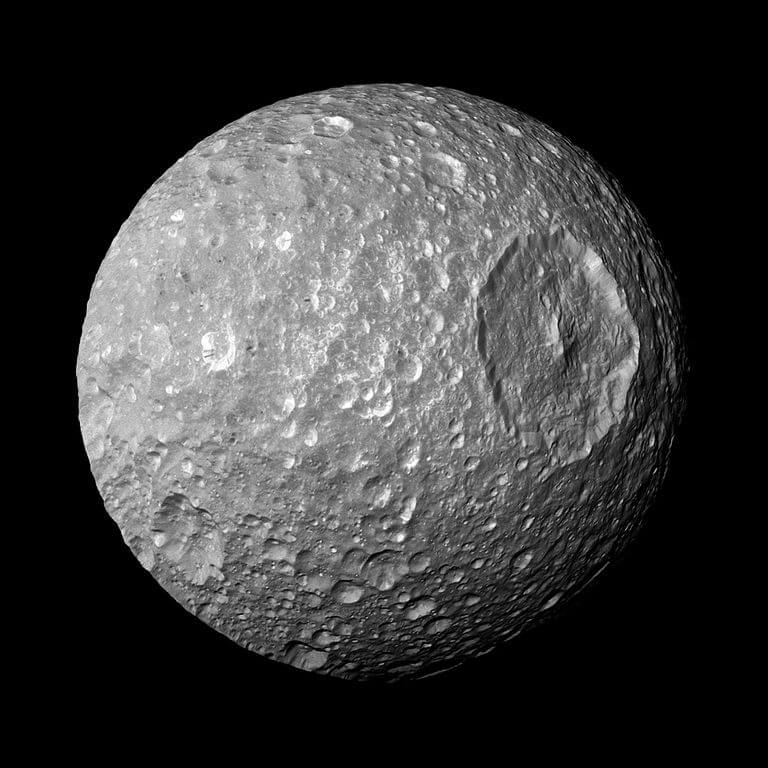
Mimas, a companion similar to the "Star of Death"
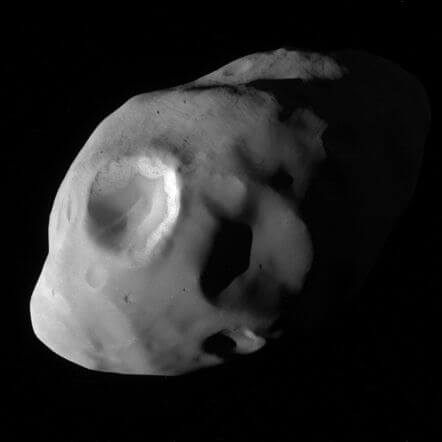
Pandora
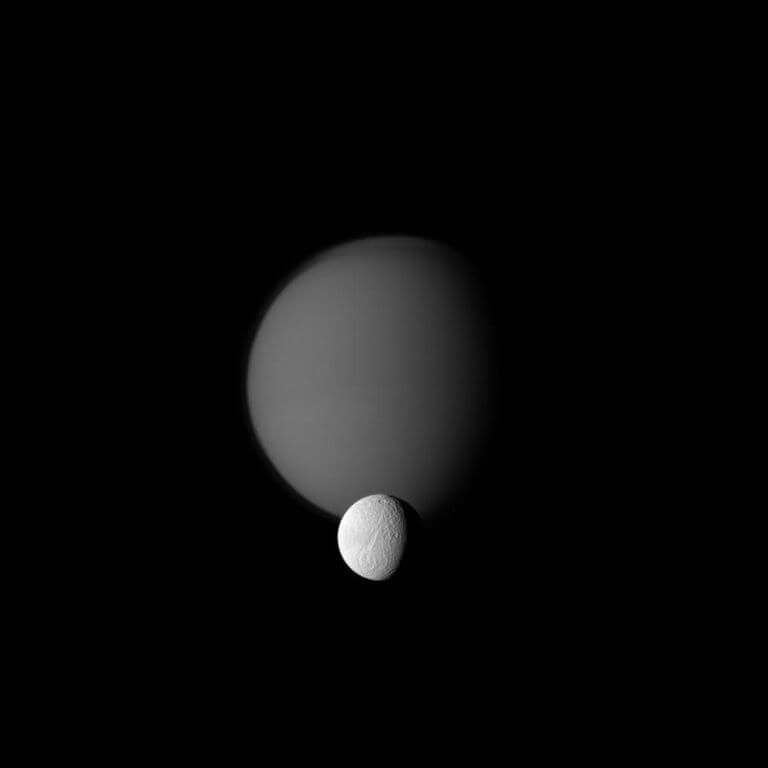
Titan and Tethys (in the foreground)
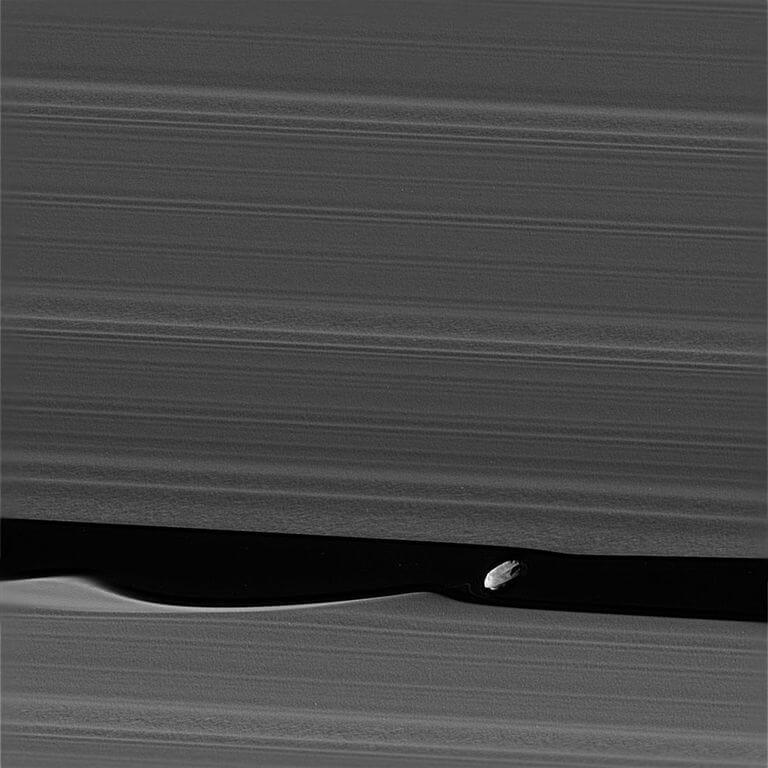
Daphnis, creating waves inside the rings of Saturn
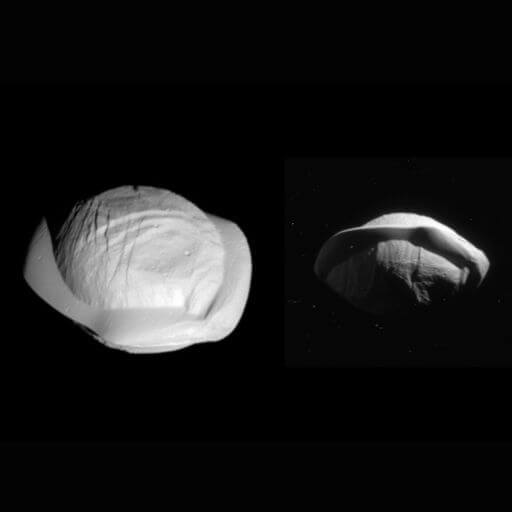
Pan (similar to dumplings)
The five most interesting discoveries of Cassini
It is difficult to list all the contribution to the planetary science that Cassini made during the 13 years of its mission, but it is not difficult to understand how much this mission means for scientists on Earth. Below, only a few of the most important discoveries made by this probe in more than a decade of its operation will be presented.
Geysers on Enceladus
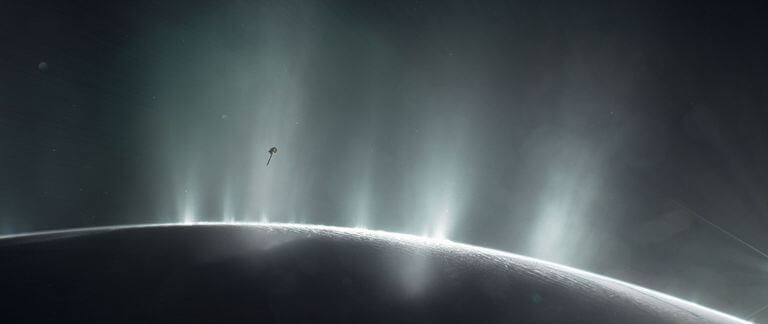
"Cassini" not only noticed, but also flew through the ejections of liquid water, fired into space from the subsurface ocean of Enceladus. The discovery was amazing. The ocean of the satellite, it is quite possible, has the correct chemical composition necessary for life, which makes it one of the most desired goals for the search for extraterrestrial life inside the solar system.
Earth-like environment of Titan
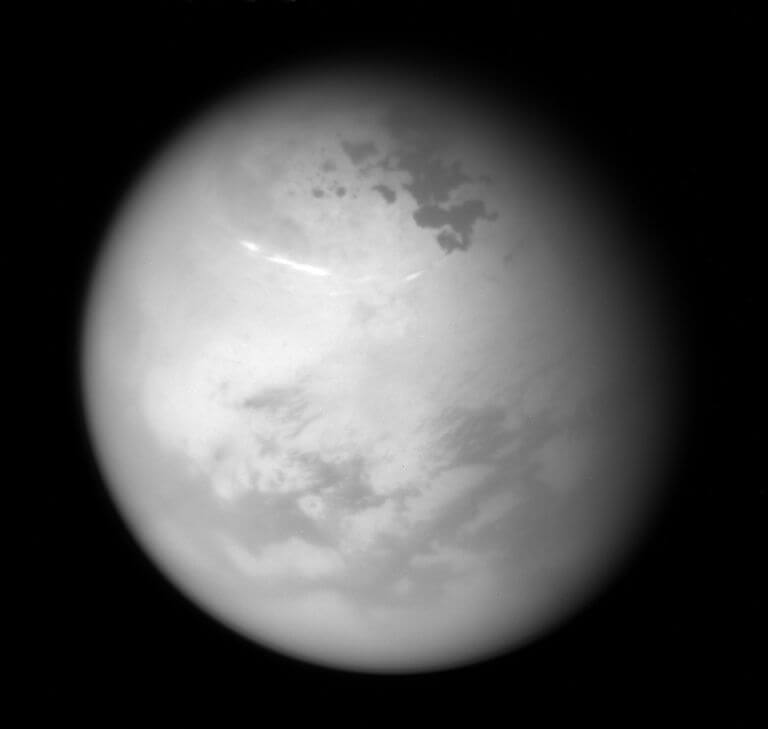
Watching Titan, we were able to learn more about ourselves. The study of one of Saturn's biggest satellites has revealed to us the complex world of lakes from liquid methane and dunes from hydrocarbons. For an untrained observer, the Titan may seem like Earth, but it is clearly a strange planet, representing an ideal example of diversity among planetary bodies.
Many satellites of Saturn
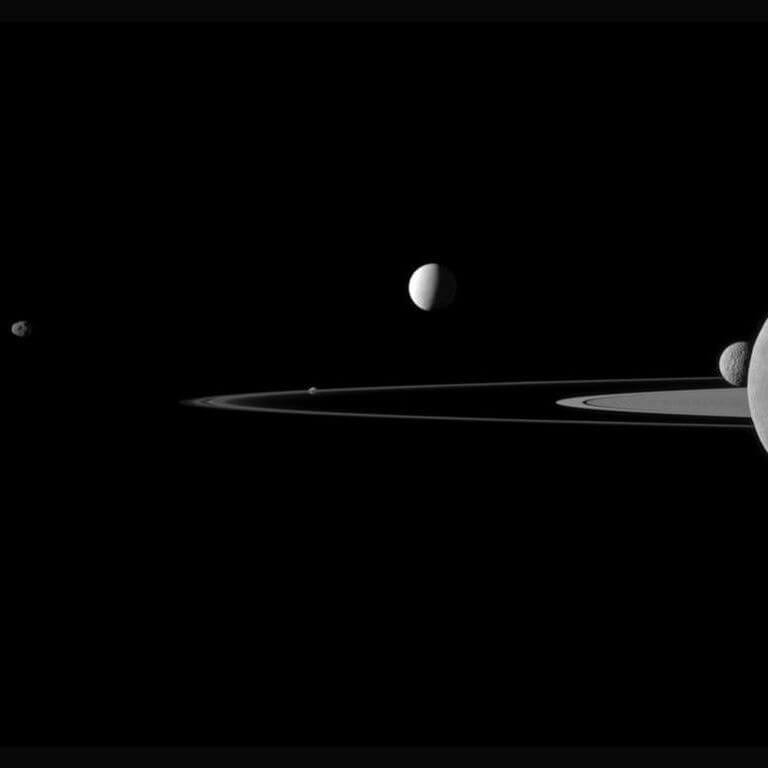
Prior to the dispatch of Cassini to Saturn in 1997, scientists only knew of the existence of 18 satellites circling around the ring giant. While the spacecraft moved to this planet for seven years, the researchers discovered 13 more satellites. However, today, thanks to the "Cassini", we were able to find out that Saturn is "the Pope" as many as 53 satellites.
Hexagonal storm of Saturn
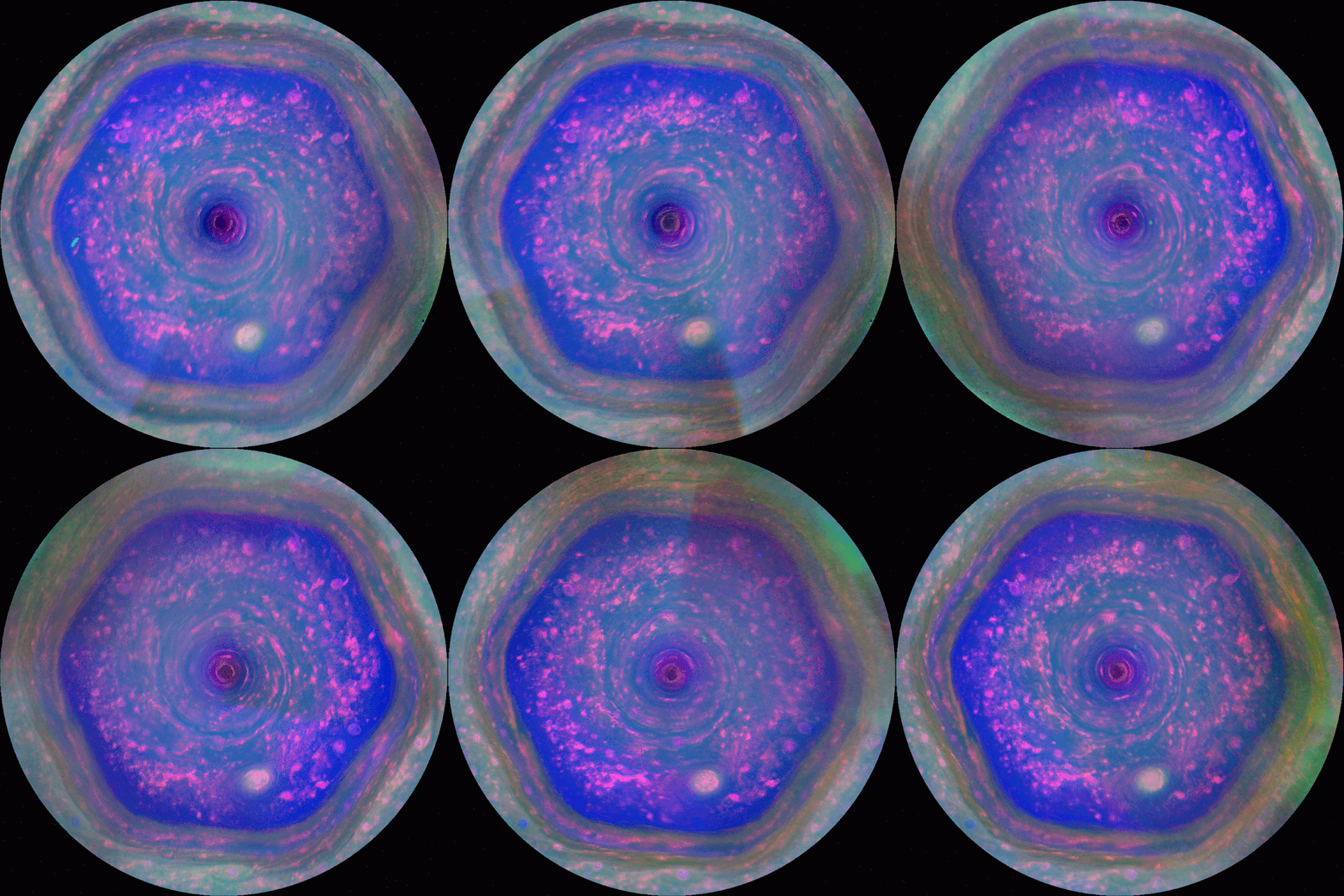
During his work, Cassini managed to get really impressive images of Saturn, but perhaps the most impressive and at the same time unique photos are the poles of the planet. We managed in detail to consider the hexagonal stream of atmospheric currents surrounding a powerful storm raging at the north pole of Saturn. According to NASA, the area of this hurricane is 50 times larger than the area of the average hurricane on Earth.
The empty space between the rings of Saturn
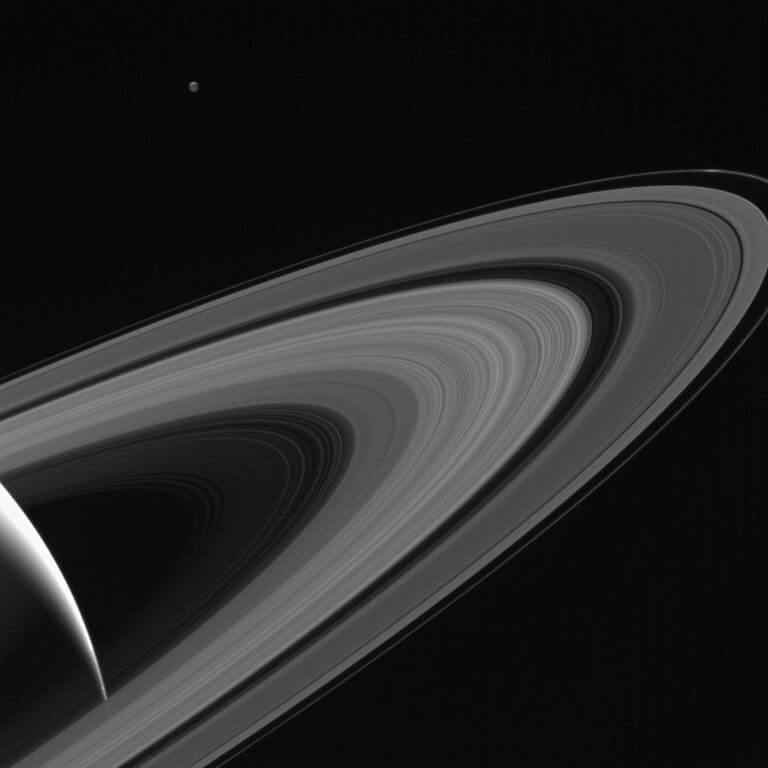
Before the culmination of the mission, "Cassini" took the position between the rings of the planet and Saturn himself. And as it turned out, it is incredibly calm. Instead of the expected dusty turbulence, swirling between the planet and the rings, the Cassini discovered an absolutely empty space within its recent orbital overflights.
Mission, which will be bored
Although, as noted above, the Cassini mission was not as bright as the Martian mission, it proved to be very useful for modern astronomy. Each month, the probe sent to Earth a truly unique, previously unseen images and new scientific data. Many novice astronomers built their careers on the basis of these data.
Completion of the mission will be a real loss for the scientific and pseudo-scientific community. Especially with the fact that, in addition to the probe that will study the satellite of Jupiter Europe, NASA and other space agencies have no plans, at least in the visible future, to continue exploring the horizons of the remote worlds of the solar system like Saturn, Neptune and Uranus.
The article is based on materials .
Comments
Post a Comment