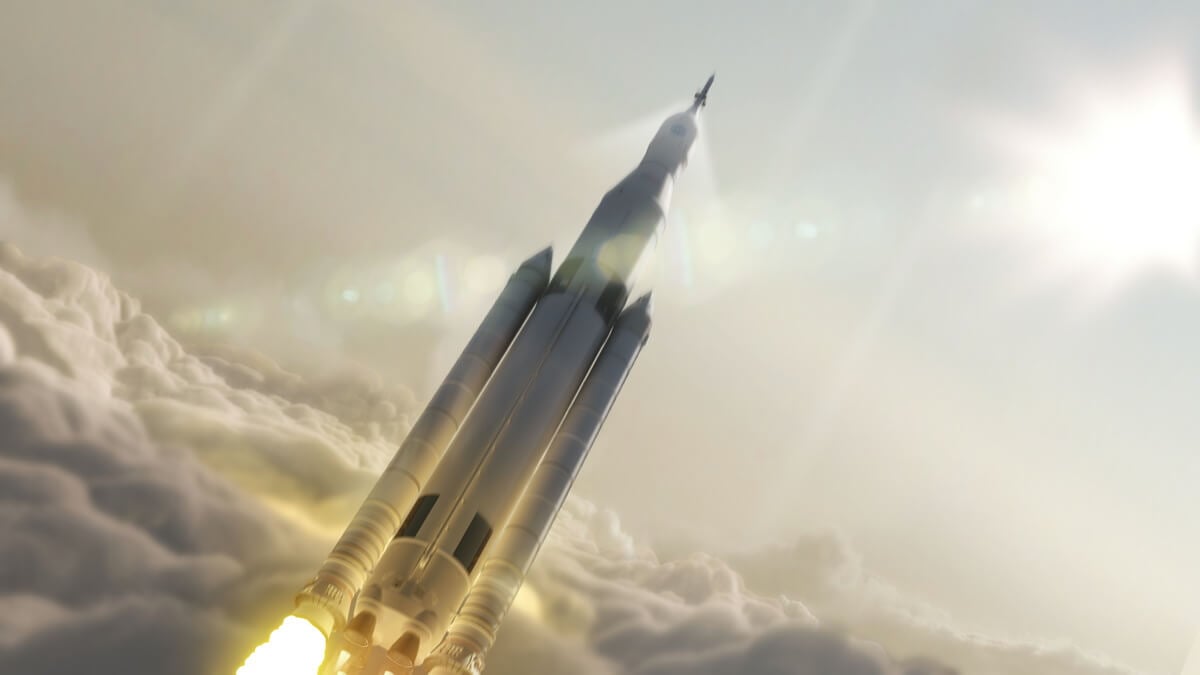
The new NASA SLS (Space Launch System) rocket can take us back to the moon and send it even further - to Mars. But it will start with 13 small satellites in 2018. NASA did not have super heavy delivery vehicles since retiring Saturn V shortly after Skylab was launched in 1973. However, today the agency announced the first launch of its new super-heavy rocket. This launch will take place without the participation of astronauts: the SLS rocket will deliver 13 Cubesat microsatellites in the vicinity of the Moon.
The EM-1 mission will consist of 4 satellites that will search for water ice, hydrogen and explore other details of the surface of our nearest space neighbor. Another Cubesat, the Scout of Near-Earth Asteroids, will be tracking the asteroids flying past Earth. Another satellite will try to test the survival of a yeast culture in outer space. Three more places will be given to the winners of a special satellite contest, and three cubes will belong to NASA partners from other countries.

After the launch, the SLS will enter orbit around the moon, after which it will release the satellites from the Orion capsule. This will be the first test of a rocket in deep space. The following rocket flights will be already manned, although now the option of using SLS to send an automated mission to Europe in 2022 is also being considered. Potential targets for manned missions include going into lunar orbit, capturing an asteroid, and first flying to Mars.
The article is based on materials .
Comments
Post a Comment